




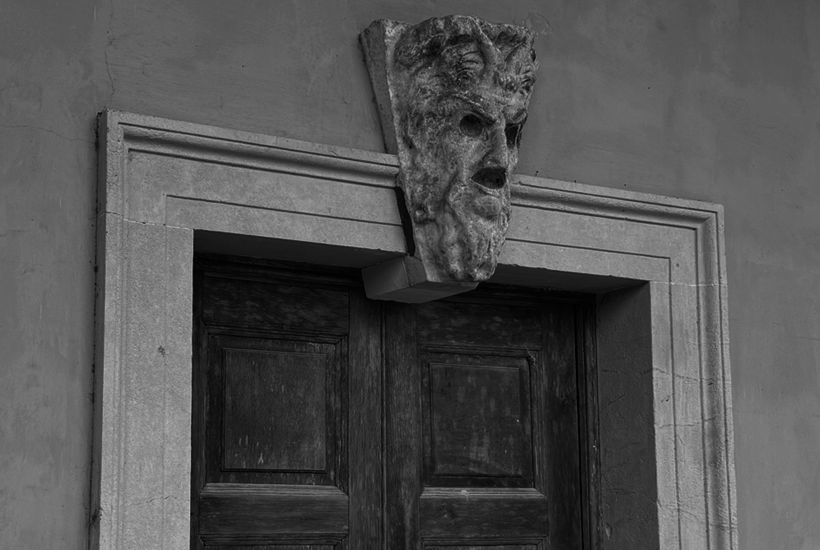
The first collection was not chosen for its appearance.
It was chosen for what a gargoyle does.
It watches. It guards. Perched on the highest point, it faces outward so those inside can live without fear.
When Domus Noctis began, a new chapter needed a guardian. Not decoration. Not symbolism borrowed from the moment. Placed with intention at the threshold of a rebuilt life.
That is what the gargoyle is. The first pillar. The figure that says: this home is watched over.
Every home that carries one continues that covenant.
Paper takes anything. Canvas takes anything. Both are forgiving, temporary, easily replaced.
Ceramic tile is none of those things.
It is fired. Permanent. Unforgiving of mistakes and indifferent to the moment. It demands commitment from the maker and from the wall that holds it.
The format — 150 by 150 — was chosen because the full picture only emerges when every piece is placed. No single tile tells the story. The image builds — slowly, deliberately — one piece at a time.
You do not see what you are building until you are most of the way through building it. And then, suddenly, it is there.
Domus Noctis began in silence, when everything else fell away.
What remained was the two of us — and the decision to rebuild.
Not from ambition, but from necessity.
From returning to the work, and to one another.
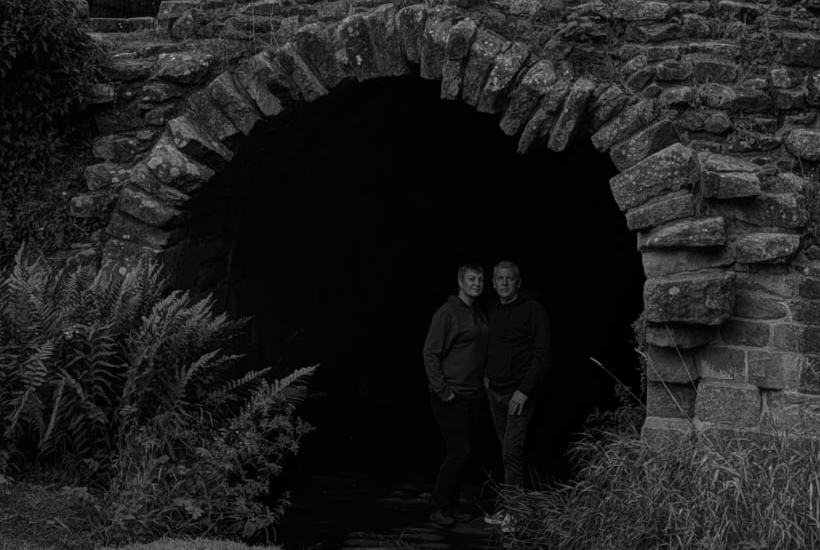
Every home has a sanctum. A room where the real life happens.
Not the room you prepare for guests. The room where the guard comes down — where food is made, where arguments are had and forgotten, where children do homework at the table, where the last glass of wine is poured long after dinner is over.
That room is the kitchen.
For decades, the market has treated it as utility. A problem to be solved on a budget. A room of compromise, stripped of imagination.
Domus Noctis exists because that is not good enough.
The heart of the home deserves weight. Permanence. A surface built to be there — not placed, not applied, not chosen from a catalogue — but committed to. With meaning.
Not tiles for walls. Monuments for the room that matters most.
Domus Noctis (“we”, “our”, “us”) is committed to protecting your privacy and handling your personal information with care. This Privacy Policy explains how we collect, use, and safeguard your data when you visit our website or make a purchase from us.
By using our website, you agree to the terms of this Privacy Policy.
If you have any questions, please contact us at: privacy@domusnoctis.com
This policy complies with the UK General Data Protection Regulation (UK GDPR) and the Data Protection Act 2018.
We collect the following types of personal data:
When you browse our website, we automatically collect:
This information helps us improve website performance and user experience.
Some data may be provided by:
We use your data to:
We only use your data where we have a lawful basis to do so (e.g., contract performance, legitimate interest, legal compliance, or your consent).
We share your data only when necessary, and never for sale.
Your information may be shared with:
These providers only use your data to perform services on our behalf.
We may disclose information if required by:
Domus Noctis uses cookies to:
You may manage cookies through your browser settings. For full details, please refer to our Cookie Policy.
We retain your personal data only for as long as necessary:
When data is no longer required, we securely delete or anonymise it.
You have the following rights regarding your personal data:
To exercise any of these rights, contact us at: privacy@domusnoctis.com
We will respond within one month as required by law.
We take security seriously and implement:
While no system is entirely risk-free, we take all reasonable steps to protect your personal information.
Our website may contain links to external websites. We are not responsible for the privacy practices or content of these sites. We recommend reviewing their policies independently.
Domus Noctis does not knowingly collect or store personal data from individuals under 16 years of age. If you believe a child has provided us with data, please contact us and we will delete it promptly.
We may update this Privacy Policy from time to time. The updated version will be posted on this page with a revised “Last Updated” date. Your continued use of the website after changes constitutes acceptance of the revised policy.
For enquiries or support:
We aim to respond within 1–2 working days.